

Beyond the Fairway: Golf Club Marketing Ideas to Attract the Next Generation of Players
April 1, 2026
Why Traditional Firms are Failing at Oil and Gas Digital Marketing
April 20, 2026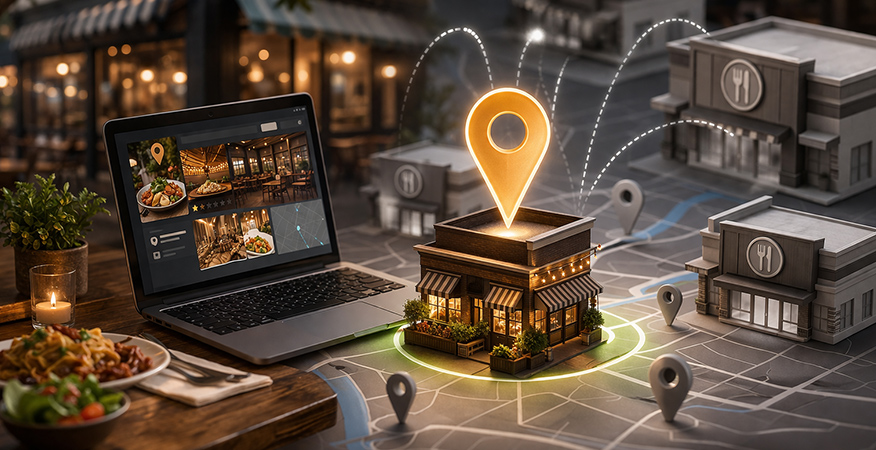
The digital landscape for dining has become a “David vs. Goliath” arena where independent eateries are constantly overshadowed by the massive advertising budgets of national chains.
While the big players rely on corporate templates and generic landing pages, local restaurants often struggle to be seen, even by the hungry diners standing just a few blocks away. The gap between being a hidden gem and a local hotspot usually comes down to one critical factor: how effectively your digital presence communicates with both humans and algorithms.
Success in this crowded market requires more than just a digital menu; it demands a strategic approach to restaurant website design that prioritizes local visibility. By leaning into neighborhood-specific relevance and high-performance technical standards, smaller establishments can effectively outmaneuver the giants. It is about transforming a simple URL into a powerful discovery engine that captures local intent and turns “near me” searches into confirmed reservations.
Why does standing out matter in today’s dining market?
The modern diner’s journey rarely begins at your front door; it begins on a smartphone screen. With “near me” searches reaching all-time highs, the hyper-local nature of food discovery means that if you aren’t visible in those first few seconds of a search, you practically don’t exist. Relying on a generic Facebook page or a clunky PDF menu is no longer a viable strategy. These formats are difficult for search engines to read and frustrating for users to navigate, often driving potential customers straight into the arms of a competitor who has invested in a seamless digital experience.
Research shows that 82% of customers visit a restaurant’s website specifically after discovering them for the first time, using that interaction to vet the brand before ever stepping foot inside. For the independent restaurateur, this is a golden opportunity to leverage the psychology of the “authentic” experience. While big chains offer corporate consistency, today’s diners are actively seeking personality, community, and soul. A strong digital first impression looks professional, and it builds the trust necessary to convert a casual browser into a loyal regular, directly impacting your reservation volume and nightly foot traffic.
What does local SEO really mean for restaurants?
Moving beyond just having a website
There is a massive difference between a site that simply looks good and one that actively communicates with search engines. A “pretty” site might showcase your dining room, but if the backend isn’t structured for discovery, you’re essentially hosting a party that no one has the address to. National chains often suffer from “bloated” corporate sites that are hard to update and slow to react. Many independent owners fall into the “set it and forget it” trap, but a stagnant site is a signal to Google that your business might be less relevant than the active competitor down the street. Effective restaurant website design is an ongoing conversation with search algorithms, ensuring your menu, hours, and location are constantly readable and indexed.
Local relevance as a strategic advantage
Local restaurants have a superpower that big chains can’t replicate: neighborhood specificity. While a massive franchise targets broad terms, you can dominate by targeting community-specific keywords like “best brunch in [Neighborhood Name]” or “outdoor seating near [Local Landmark].” This localized storytelling, combined with neighborhood-specific landing pages, creates a level of relevance that national competitors simply can’t match.
Furthermore, since many diners are searching on the go, technical signals like site speed and mobile responsiveness are now the ultimate deciders of your rank. A fast, frictionless restaurant website design ensures that when a hungry user is searching from their car, your site loads instantly with a clear “Directions” button, beating out the slower, clunkier portals of the national giants.
What design strategies help local restaurants outrank the chains?
One of the most effective ways to jump ahead of the competition is by implementing Schema Markup. This technical backend work helps search engines read your specific menu items, operating hours, and customer reviews directly from the code. While big chains often have rigid systems that make this level of detail difficult to maintain, a flexible restaurant website design allows you to feed Google exactly what it wants. This ensures that when someone searches for a specific dish, your restaurant appears in the results with a clear star rating and price range already visible.
Navigation should always be built with a mobile-first mindset because the majority of your customers are likely searching while they are already out. You should prioritize “Directions” and “Call” buttons so they are accessible with a single tap. Integrating your Google Business Profile signals directly into the layout also creates a seamless loop between your search listing and your website. This strategy confirms your location and active status to search algorithms while providing users with the real-time information they need to make a dining decision quickly.
Authenticity is your greatest weapon against the soulless stock photography used by national franchises. Using high-quality visuals of your actual food and dining room creates a genuine connection that corporate marketing cannot replicate. You can further boost your local authority by showcasing social proof like community awards, mentions in local press, and neighborhood reviews. This tells both the search engine and the diner that you are a trusted staple of the local community, which is a signal of relevance that a national chain simply cannot buy.
How local SEO and restaurant website design drive real business growth
Strategic digital optimization allows you to capture high-intent traffic at the exact moment a diner is making a decision. By appearing at the top of local search results, you shift the customer journey away from high-commission third-party delivery apps and toward direct-to-site orders. This transition significantly improves your profit margins and allows you to own the customer relationship from the very first click. Over time, your restaurant website design becomes a sustainable digital asset that builds authority, ensuring you remain the top choice for the neighborhood regardless of how many chains move into the area.
Investing in a high-performance site also ensures that one-time searchers are converted into loyal, local brand advocates through a frictionless user experience. Utilizing professional website design and development ensures that your technical foundation is built for long-term ranking success, allowing you to stay ahead of algorithm shifts and changing consumer habits. When your digital presence is as polished as your service, you stop chasing customers and start building a community that knows exactly where to find you.
Frequently Asked Questions
Below are some additional questions to consider:
Can a small restaurant really outrank a national chain with millions in ad spend?
Yes, because Google prioritizes “relevance” and “proximity.” A site optimized for a specific neighborhood will often beat a generic national page.
Does site speed actually affect how many people walk through my doors?
Absolutely. Most restaurant searches happen on mobile; if your site takes more than 3 seconds to load, 50% of potential diners will bounce to a competitor.
Should I keep my menu as a PDF to help with SEO?
Actually, no. Interactive, text-based menus are much better for SEO because search engines can index the actual names of your dishes, helping you show up for specific food cravings.